
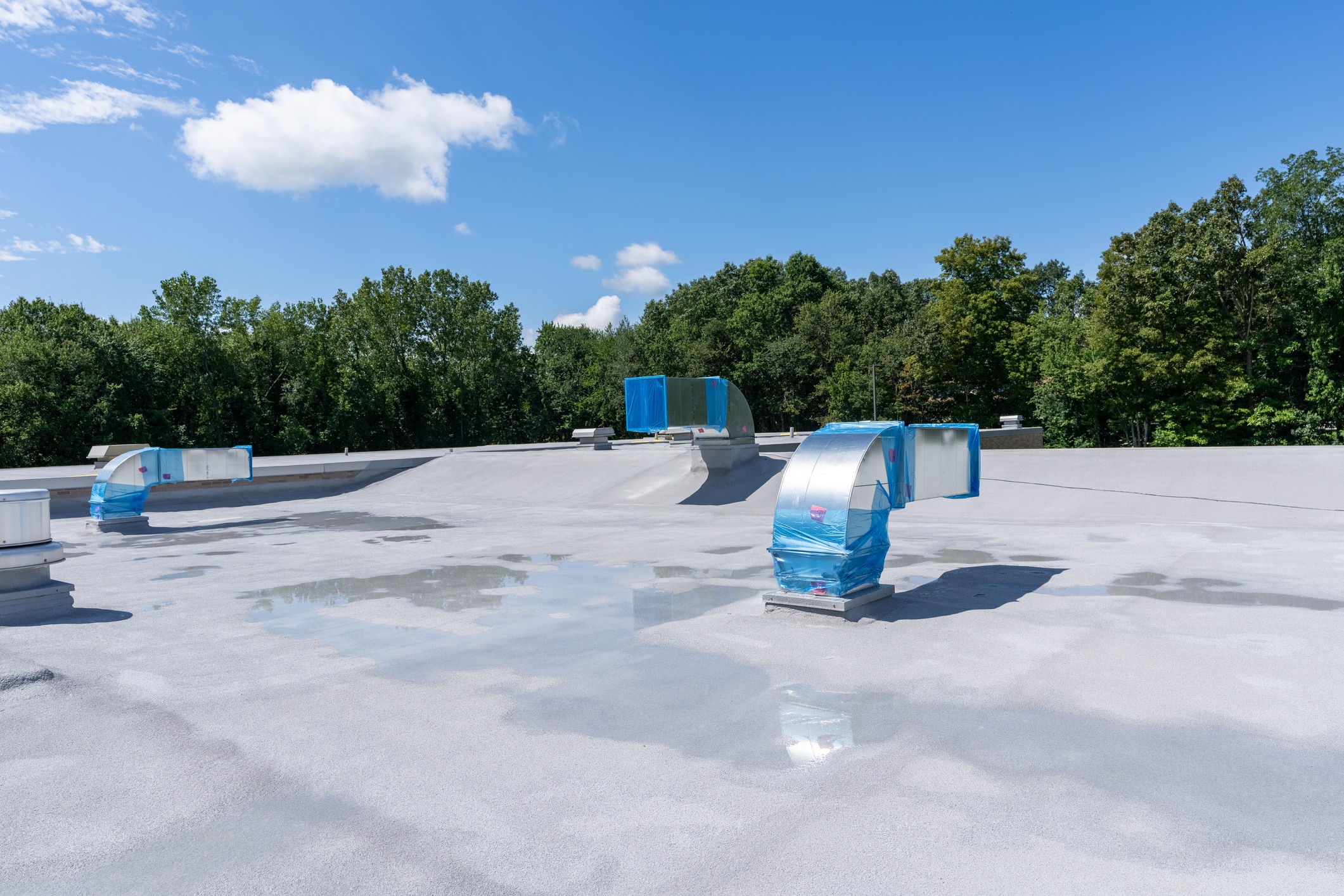
If you’ve noticed standing water on your commercial flat roof that remains 48 hours or more after rainfall, you have a ponding water problem. While it might seem harmless—just puddles that will eventually evaporate—ponding water is actually one of the most serious threats to your roof’s performance and lifespan.
Left unaddressed, ponding water accelerates membrane deterioration, voids warranties, promotes leak development, and can even lead to catastrophic structural failure. The good news? Ponding water problems can be solved with the right approach.
TPO Roofer has corrected ponding water issues on hundreds of commercial roofs in the Houston area. Here’s everything you need to know about why ponding water happens, the damage it causes, and how to fix it permanently.
What is Ponding Water?
Ponding water is standing water that remains on a flat or low-slope roof for 48 hours or more after rainfall stops.
Key characteristics:
- Water depth typically ½ inch to several inches
- Remains in the same location after each rain
- Doesn’t drain within 48 hours
- Often leaves visible staining or discoloration
- May support algae or vegetation growth
Important distinction: Water that drains within 48 hours is generally not considered ponding, though it still indicates drainage could be improved.
Why Ponding Water is a Serious Problem
Many building owners underestimate ponding water—”it’s just water, it’ll evaporate eventually.” But ponding water causes multiple serious problems:
1. Accelerated Membrane Deterioration
Standing water breaks down roofing membranes faster than normal weathering:
- UV damage intensifies – Water magnifies UV radiation like a lens
- Membrane plasticizers leach out – Chemicals that keep TPO flexible dissolve
- Constant moisture exposure – Membranes aren’t designed for continuous water immersion
- Freeze-thaw cycles – In winter, ponded water freezing causes expansion damage
Result: Membranes in ponding areas often fail 5-10 years earlier than properly drained areas.
2. Increased Leak Risk
Ponding water finds every weakness:
- Constant water pressure tests seams and flashings
- Water penetrates minor imperfections that would otherwise be harmless
- Membrane deterioration creates new leak paths
- Penetrations and fasteners are continuously exposed to water
One small puncture in a ponding area becomes a major leak because water is always present to exploit it.
3. Structural Load Concerns
Water is heavy—very heavy:
- One inch of water weighs 5.2 pounds per square foot
- A 20′ x 20′ ponding area (400 sq ft) with 2″ of water = 4,160 pounds
- After heavy rain, ponding areas can hold thousands of pounds of unexpected load
Roofs designed for minimal load may experience structural stress, deflection, or even failure under ponding water weight—especially during heavy rainfall events.
4. Warranty Voidance
Most TPO roof warranties specifically exclude coverage for ponding water damage.
Manufacturer warranties typically state:
- Ponding water voids material warranties
- Damage caused by ponding is not covered
- Contractor workmanship warranties may also be voided
If your roof fails in a ponding area, you’re paying for repairs out of pocket—even with an active warranty.
5. Progressive Worsening
Ponding water problems get worse over time, not better:
- Weight of water causes additional roof deflection
- Deflection creates deeper ponds that hold more water
- More water causes more deflection
- The cycle continues until structural failure or major repairs are required
Early intervention is critical before minor ponding becomes a major structural problem.
6. Secondary Damage
Ponding water creates additional problems:
- Algae and vegetation growth – Damages membrane and looks unprofessional
- Mosquito breeding – Health and liability concerns
- Ice dams in winter – Ponded water freezes, preventing proper drainage
- Interior damage – When leaks develop, water damage affects building interior
Common Causes of Ponding Water
Understanding why ponding occurs is the first step to fixing it.
1. Inadequate Roof Slope
The most common cause of ponding water.
- Flat roofs should have minimum ¼” per foot slope toward drains
- Many roofs are built completely flat or with insufficient slope
- Even small areas of negative slope create ponding
- Poor construction or design creates low spots
Solution requires: Adding slope through tapered insulation systems or structural modifications.
2. Roof Deflection and Sagging
Structural deflection creates low spots where water collects:
- Deck deflection between structural supports
- Inadequate structural support for roof loads
- Aging structural members that have sagged over time
- Overloaded roof areas from equipment or materials
Solution requires: Structural evaluation and reinforcement, plus drainage improvements.
3. Clogged or Inadequate Drainage
Even properly sloped roofs pond if drainage systems fail:
- Clogged drains prevent water from exiting
- Too few drains for roof size and rainfall intensity
- Undersized drains can’t handle water volume
- Debris accumulation blocks water flow to drains
Solution requires: Drain cleaning, additional drains, or larger capacity drainage systems.
4. Compression of Insulation
Roof insulation can compress over time:
- Foot traffic compresses insulation in walkways
- Equipment weight creates compressed areas
- Water saturation from leaks compresses insulation
- Poor quality insulation compresses under normal loads
Compressed insulation creates low spots where water ponds.
Solution requires: Replacing damaged insulation and adding tapered systems.
5. Settlement or Structural Movement
Building settlement creates ponding conditions:
- Foundation settlement changes roof plane
- Structural movement from thermal expansion/contraction
- Seismic activity (less common in Houston)
- Soil movement affecting building structure
Solution requires: Addressing structural issues, then correcting drainage.
6. Poor Original Design
Some roofs were simply designed poorly:
- No consideration for drainage during design
- Drains placed in wrong locations
- Inadequate slope designed into roof
- HVAC equipment blocking drainage paths
Solution requires: Comprehensive drainage redesign and correction.
How to Identify Ponding Water Problems
Visual inspection after rainfall:
Look for these signs:
- Standing water 48+ hours after rain
- Visible staining or discoloration in specific areas
- Algae or vegetation growth
- Dirt accumulation in low spots
- Membrane deterioration in specific areas
Professional inspection:
Roofing professionals use:
- Moisture meters to detect saturated areas
- Level surveys to identify low spots
- Drain flow testing
- Structural assessment
- Infrared scanning to detect moisture
Don’t wait for leaks to develop. If you see ponding, address it proactively.
Solutions for Ponding Water
The right solution depends on the cause and severity of ponding.
Solution 1: Tapered Insulation Systems (Most Common)
Best for: Roofs with inadequate slope or minor deflection.
How it works:
- Custom-designed tapered insulation panels installed over existing roof deck
- Creates positive slope toward drains (minimum ¼” per foot)
- Eliminates low spots and ponding areas
- Can be installed during re-roofing or as a retrofit
Advantages:
- Permanently solves ponding problems
- Improves insulation and energy efficiency
- Works with existing roof structure
- Cost-effective for most situations
Process:
- Professional survey identifies low spots and drainage patterns
- Custom tapered insulation system designed
- Existing membrane removed (if re-roofing) or retained
- Tapered insulation installed
- New TPO membrane installed over tapered system
- Proper drainage achieved
Solution 2: Additional Drains
Best for: Roofs with adequate slope but insufficient drainage capacity.
How it works:
- Additional roof drains installed in ponding areas
- Reduces distance water must travel to reach drains
- Increases total drainage capacity
- Provides redundancy for drainage system
Considerations:
- Requires structural penetrations
- Must connect to building drainage system
- May require interior work
- Most effective combined with tapered insulation
Solution 3: Structural Repairs
Best for: Roofs with structural deflection or damage causing ponding.
How it works:
- Structural engineer evaluates roof structure
- Reinforcement or repairs address deflection
- Additional support added where needed
- Drainage improvements follow structural repairs
When required:
- Visible structural sagging
- Deflection exceeding design limits
- Damaged or deteriorated structural members
- Overloaded roof areas
Solution 4: Drain Maintenance and Upgrades
Best for: Roofs where clogged or undersized drains cause ponding.
How it works:
- Clean all existing drains thoroughly
- Upgrade to larger drain strainers
- Replace damaged drain components
- Install secondary overflow drains
- Implement regular maintenance program
Quick and cost-effective when drainage system is the primary problem.
Solution 5: Roof Crickets
Best for: Localized ponding areas around roof penetrations or equipment.
How it works:
- Small tapered structures (crickets) installed
- Diverts water around obstacles
- Creates positive drainage in problem areas
- Prevents water accumulation behind equipment
Common applications:
- Behind HVAC units
- Around large roof penetrations
- Between equipment and walls
- In corners and valleys
Solution 6: Complete Roof Replacement with Proper Design
Best for: Severely ponding roofs with multiple problems or roofs at end of lifespan.
How it works:
- Remove existing roof system completely
- Address any structural issues
- Install comprehensive tapered insulation system
- Design optimal drain placement
- Install new TPO membrane system
- Achieve proper drainage throughout
Most comprehensive solution that addresses all ponding causes simultaneously.
Choosing the Right Solution
Factors to consider:
Severity of Ponding
- Minor ponding: Drain improvements or small tapered areas
- Moderate ponding: Comprehensive tapered insulation system
- Severe ponding: May require structural repairs plus drainage improvements
Roof Age and Condition
- Newer roofs: Retrofit solutions to preserve investment
- Older roofs: Combine ponding correction with planned replacement
- Severely damaged roofs: Complete replacement may be most cost-effective
Budget Considerations
- Drain cleaning and maintenance: $500-$2,000
- Additional drains: $2,000-$5,000 per drain
- Tapered insulation retrofit: $3-$7 per square foot
- Complete replacement with tapered system: $8-$15 per square foot
Building Use and Disruption
- Some solutions can be completed with minimal disruption
- Others require significant roof work
- Consider timing and business impact
Long-term vs. Short-term
- Temporary fixes (drain cleaning) provide short-term relief
- Permanent solutions (tapered insulation) solve problems for roof’s lifetime
- Consider total cost of ownership
The TPO Roofer Ponding Water Correction Process
Step 1: Comprehensive Assessment
We evaluate:
- Extent and severity of ponding
- Roof structure and condition
- Drainage system capacity
- Membrane condition in ponding areas
- Building use and constraints
Step 2: Custom Solution Design
Based on assessment, we design:
- Tapered insulation systems (if needed)
- Drainage improvements
- Structural recommendations (if needed)
- Phased approach for budget management
Step 3: Detailed Proposal
You receive:
- Clear explanation of ponding causes
- Recommended solution with alternatives
- Detailed scope of work
- Transparent pricing
- Timeline and disruption expectations
Step 4: Expert Installation
Our certified crews:
- Complete work efficiently and professionally
- Minimize business disruption
- Use quality materials and proven methods
- Ensure proper drainage throughout
- Clean up completely
Step 5: Verification and Documentation
After completion:
- Water testing verifies proper drainage
- Photo documentation shows correction
- Warranty information provided
- Maintenance recommendations given
Preventing Ponding Water
For new roofs:
- Design minimum ¼” per foot slope toward drains
- Use tapered insulation systems
- Place drains strategically
- Size drainage for Houston rainfall intensity
- Consider future deflection in design
For existing roofs:
- Maintain drainage systems regularly
- Address small ponding areas before they worsen
- Include ponding assessment in routine inspections
- Budget for corrections before major problems develop
Don’t Let Ponding Water Destroy Your Roof
Ponding water is a serious problem that won’t fix itself. Every rain event accelerates damage, shortens your roof’s lifespan, and increases the risk of costly leaks and structural problems.
The solution is straightforward: Professional assessment, proper drainage design, and expert correction. The investment in fixing ponding water is a fraction of the cost of premature roof replacement or major structural repairs.
Schedule Your Ponding Water Assessment Today
TPO Roofer specializes in correcting ponding water problems on commercial flat roofs throughout Houston and Texas. Our comprehensive assessments identify causes, and our expert crews deliver permanent solutions that protect your roof investment.
Call TPO Roofer at 409-739-7854 to schedule your ponding water assessment, or fill out our contact form below.
Stop the damage. Fix the problem. Protect your roof.