What Is A TPO Roof?
What is a TPO Roof? Complete Guide for Commercial Building Owners
Understanding TPO Roofing Systems
If you’re researching commercial roofing options for your building, you’ve likely come across TPO roofing. But what exactly is TPO, and why has it become one of the most popular choices for flat and low-slope commercial roofs across the United States?
TPO has rapidly gained popularity in the flat roofing market due to its advanced technology, durability, and energy-efficient solutions for modern commercial buildings.
TPO Roofer breaks down everything you need to know about TPO roofing systems—from how they work to why they might be the perfect solution for your building.
What Does TPO Stand For?
TPO stands for Thermoplastic Polyolefin. It’s a single-ply roofing membrane specifically engineered for commercial flat and low-slope roofs. Think of it as a large, durable sheet of advanced plastic material that creates a watertight barrier protecting your building from the elements. A TPO sheet is made from a blend of polypropylene and ethylene-propylene rubber, manufactured into a flexible, reinforced membrane that is highly resistant to UV rays, punctures, and chemical exposure—making it a critical component in ensuring the durability and weather resistance of TPO roofing systems.
TPO roofing has been used commercially since the 1990s and has continuously improved through advances in material science and manufacturing technology.
How TPO Roofing Works
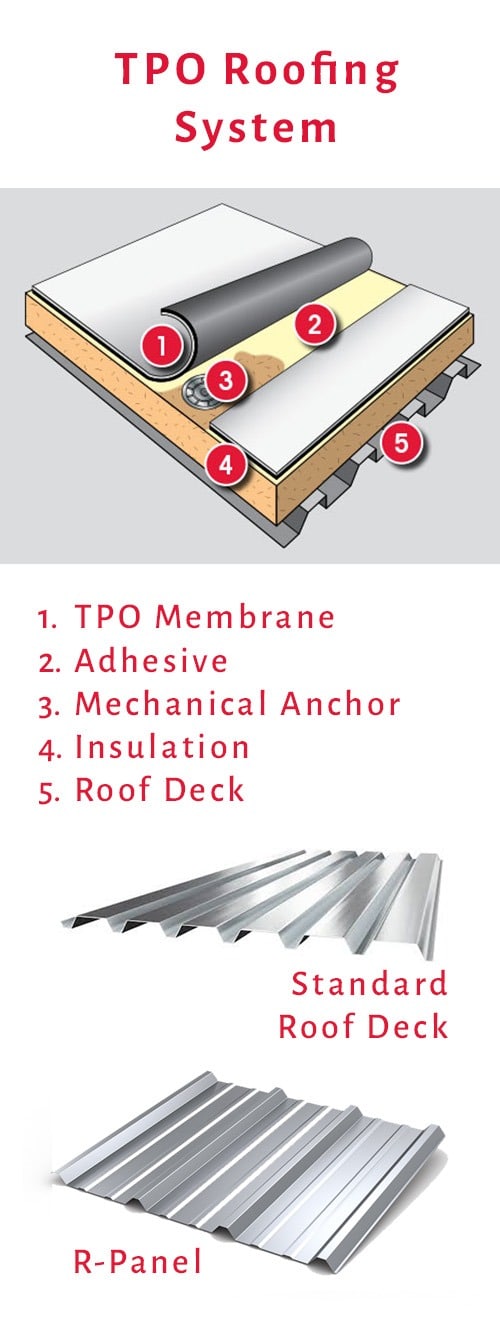
A TPO roofing system consists of several key components working together: the TPO membrane, insulation, cover board, adhesives or fasteners, and flashing. Each of these elements plays a crucial role in the overall performance and longevity of the TPO system, ensuring durability, energy efficiency, and reliable protection for commercial and industrial buildings.
The TPO Membrane
The visible white (or tan/gray) roofing surface is the TPO roofing membrane itself—typically 45 to 80 mils thick (about the thickness of a credit card to slightly thicker). Membrane thickness can impact the durability and performance of the roof, with thicker membranes generally offering increased resistance to punctures and weathering, though thickness alone does not always determine overall quality. The TPO roofing membrane is known for its excellent reflective properties and resistance to UV radiation, making it a popular choice for energy-efficient commercial roofing. TPO membranes often include ethylene propylene rubber, which enhances flexibility and durability in thermoplastic roofing materials. This flexible, durable sheet is manufactured in large rolls and installed across your entire roof surface.
Insulation Layer
Beneath the TPO membrane sits rigid insulation board that provides thermal resistance, helping regulate your building’s temperature and reduce energy costs. Polyiso insulation is a common choice for TPO roofing systems due to its compatibility and effectiveness as a separating layer over various substrates. Proper roofing insulation is essential for maximizing thermal resistance and energy efficiency in commercial roofing applications. During repairs, it is important to address wet insulation—if the insulation is saturated, the wet insulation must be removed to maintain the integrity and performance of the roofing system.
Cover Board (Optional)
Some systems include a protective cover board between the insulation and membrane for added puncture resistance and durability.
Roof Deck
Everything sits on top of your building’s structural roof deck—typically concrete, metal, or wood. Before installing the TPO membrane, it is crucial to properly prepare the existing substrate by cleaning, repairing, and ensuring it is smooth and free of debris to promote optimal membrane adhesion and performance.
Heat-Welded Seams
Here’s what makes TPO special: where membrane sheets overlap, they’re fused together using hot air welding equipment. This creates permanent, watertight seams that are actually stronger than the membrane itself—no adhesives, no tape, just a solid molecular bond.
Why TPO Roofing Has Become So Popular
1. Exceptional Energy Efficiency
TPO’s surface reflects UV rays with high solar reflectivity, helping to keep buildings cooler by minimizing heat absorption. The bright white roof typical of TPO systems further enhances energy savings by reflecting sunlight and reducing cooling costs during hot summer months. TPO also qualifies as a cool roof due to its high reflectivity and thermal emittance, making it an excellent choice for energy-efficient commercial roofing. For commercial buildings in hot climates like Houston, this translates to:
-
20-40% reduction in cooling costs
-
Less strain on HVAC systems
-
Lower monthly utility bills
-
EPA ENERGY STAR certification
2. Proven Durability
TPO roofs are built tough to handle:
-
Intense UV radiation and extreme heat
-
Heavy rain and standing water
-
High winds and storm conditions
-
Temperature fluctuations
-
Chemical exposure and pollutants
-
Punctures and tears
However, excessive heat can impact TPO membranes by causing seams and flashings to pull apart or accelerating membrane deterioration, especially if installation is not done correctly.
With proper installation and maintenance, TPO roofs regularly last 30+ years.
3. Cost-Effective Installation
The installation process for TPO roofing is designed to be efficient and cost-effective for commercial buildings. TPO roofing installation can vary depending on the method used and the specific requirements of the building. The duration of TPO installation depends on several factors, including roof size and complexity—larger or more intricate roofs may require more time and planning. TPO membranes are lightweight and come in wide sheets (up to 12 feet), which means:
-
Faster installation
-
Lower labor costs
-
Less disruption to your business
-
Fewer seams (fewer potential leak points)
During installation, bonding adhesive is often used as one of the primary methods to securely attach TPO membranes to the substrate or cover board, ensuring a durable and watertight seal.
4. Low Maintenance Requirements
Unlike built-up roofing or modified bitumen systems that need regular recoating, TPO maintains its protective properties with minimal upkeep. Routine inspections and basic cleaning are typically all that’s required.
5. Environmentally Friendly
TPO roofing contains no chlorine, CFCs, or other harmful chemicals. The membranes are recyclable at end of life and contribute to LEED certification for green buildings. TPO formulations continue to evolve, with manufacturers working to improve environmental performance and recyclability.
Three Installation Methods for TPO Roofing
TPO’s versatility is another major advantage. Versico TPO roofing systems can utilize several methods, including mechanically attached, fully adhered, and induction-welded techniques, each offering unique benefits for different building requirements. It can be installed using three different methods depending on your building’s needs:
Mechanically Attached
The membrane is fastened directly to the roof deck using screws and plates, then covered with membrane strips that are heat-welded in place. This method works well for most applications and provides excellent wind uplift resistance.
Fully Adhered
The membrane is bonded to the insulation or substrate using special adhesives across the entire roof surface. This creates a completely smooth appearance and is ideal for areas with extreme wind exposure.
Ballasted
The membrane is laid loosely over the roof and held in place with river rock or pavers around the perimeter and penetrations. This is the most economical method but requires a roof structure capable of supporting the additional weight.
TPO vs. Other Commercial Roofing Systems
TPO vs. EPDM (Rubber Roofing)
-
Color: TPO is white/reflective; EPDM is typically black
-
Energy efficiency: TPO reflects heat; EPDM absorbs it
-
Seams: TPO uses heat-welding; EPDM uses adhesives or tape
-
Best for: TPO excels in hot climates; EPDM works well in cooler regions
TPO vs. PVC
-
Cost: TPO is generally less expensive than PVC
-
Chemical resistance: PVC offers superior resistance to certain chemicals
-
Performance: Both offer excellent durability and energy efficiency
-
Best for: TPO for standard commercial applications; PVC for restaurants or facilities with grease/chemical exposure
TPO vs. Built-Up Roofing (BUR)
-
Installation: TPO is faster and cleaner
-
Weight: TPO is much lighter
-
Maintenance: TPO requires less ongoing maintenance
-
Lifespan: Both can last 30+ years with proper care
Is TPO Roofing Right for Your Building?
TPO roofing is an excellent choice for:
✓ Flat or low-slope commercial roofs
✓ Buildings in hot, sunny climates (like Houston and Texas)
✓ Business owners seeking energy savings
✓ New construction or roof replacement projects
✓ Properties requiring long-term, low-maintenance solutions
✓ Green building or LEED certification projects
Ideal Building Types:
-
Office buildings and business parks
-
Warehouses and distribution centers
-
Retail stores and shopping centers
-
Medical facilities and healthcare buildings
-
Schools and educational institutions
-
Restaurants and hospitality properties
-
Industrial and manufacturing facilities
Brands
Services
Have Any Question?
Send Message
Cost of TPO Roofing
When considering TPO roofing for your commercial or industrial building, understanding the cost factors is essential for budgeting and planning. On average, TPO roofing costs range from $5 to $15 per square foot, which includes both materials and professional installation. This makes TPO one of the most cost-effective roofing systems available for large-scale applications.
Several factors influence the final price of your TPO roofing system. The size and complexity of your roof play a significant role—larger roofs or those with many penetrations and details may require more labor and materials. The installation method you choose, such as mechanically fastened or fully adhered, can also impact costs. Mechanically fastened systems are often more economical and quicker to install, while fully adhered systems may offer additional benefits in certain environments.
The type of insulation used beneath the TPO membrane—such as polyiso, expanded polystyrene (EPS), or extruded polystyrene (XPS)—also affects the overall price per square foot. Each insulation option offers different levels of thermal performance and durability, which can influence both upfront costs and long-term energy savings.
Ultimately, TPO roofing provides a balance of affordability, performance, and longevity, making it a smart investment for commercial and industrial buildings seeking a reliable, energy-efficient, and cost-effective roofing solution.
Maintenance and Repair of TPO Roofing
Maintaining your TPO roofing system is key to ensuring its long-term performance and protecting your investment. Regular inspections by a qualified roofing contractor can help identify potential issues early, such as punctures, cracks, or loose seams, before they develop into more serious problems. Prompt roofing repairs—whether patching small areas or re-welding seams—are essential to prevent water intrusion and maintain the integrity of your roof.
Keeping the TPO membrane clean and free of debris not only preserves its energy efficiency by maximizing reflectivity but also helps prevent damage from standing water or accumulated dirt. Routine maintenance tasks, such as clearing drains and checking for signs of wear, can extend the life of your TPO roofing system to 20-30 years or more.
For property owners and facility managers, partnering with an experienced roofing contractor to develop a tailored maintenance plan is a cost-effective way to protect your commercial or industrial building. Proactive care reduces the likelihood of unexpected repairs, supports energy savings, and ensures your TPO roof continues to perform at its best year after year.
Call Culvco, LLC
TPO roofing stands out as a leading choice among commercial roofing materials for its exceptional blend of performance, affordability, and sustainability. With its advanced TPO membrane, heat welded seams, and proven UV resistance, TPO roofing systems deliver reliable protection and energy efficiency for low slope roofs in commercial and industrial buildings.
When properly installed by a certified roofing contractor and maintained with regular inspections and timely repairs, a TPO roof can provide decades of service—often 20-30 years or more. Compared to other commercial roofing options, TPO offers a cost-effective solution that helps building owners manage energy costs, reduce maintenance needs, and achieve long-term value.
Whether you’re planning a new construction project or replacing an existing roof, TPO roofing is a smart investment for any commercial or industrial facility. Its bright white surface, superior heat welded seams, and outstanding durability make it ideal for buildings in sunny, high-heat environments. As the commercial roofing industry continues to evolve, TPO roofing’s popularity and market share are only expected to grow, making it a reliable and energy-efficient choice for years to come.
Protect your investment with TPO roofing expertise you can trust.
REASON
For Choosing Us
TPO Roofing Specialists
We don't do everything—we master one thing. TPO roofing is our sole focus, giving you access to specialized knowledge and installation techniques that generalist contractors simply can't match.
30+ Year Performance
Our TPO systems are engineered for longevity. With proper installation and minimal maintenance, your roof will protect your investment for 30+ years, delivering exceptional long-term value.
Premium Brand Partners
We're certified installers of industry-leading brands including Firestone, Versico, and GAF. You get top-tier materials backed by manufacturer warranties and our expert craftsmanship.
Energy Efficiency Guaranteed
Transparent Pricing & Process
From initial inspection to project completion, we provide clear communication, detailed proposals, and transparent pricing. You'll know exactly what to expect every step of the way.
Texas-Based, Always Available
We're here when you need us. As a Texas-based company, we understand the challenges of Texas weather and provide fast response times for inspections, maintenance, and emergency repairs.
Get Your Roofing Project Started Today!
RELATED SERVICES
Commercial TPO Installation
Durable, energy-efficient TPO systems designed for flat and low-slope commercial roofs. Engineered for longevity, installed with precision, backed by trusted brands.
Industrial TPO Installation
Built to withstand demanding environments. Our industrial TPO systems deliver superior protection for warehouses, factories, and large-scale facilities with proven 30+ year performance.
TPO Retrofit
Cost-effective TPO retrofit solutions that restore aging roofs, improve energy efficiency, and add years of reliable protection—without the expense of complete tear-off.
Roof Inspection Services
Comprehensive TPO roof inspections identify vulnerabilities, assess condition, and provide actionable insights to protect your investment and prevent unexpected failures.
Roof Maintenance Programs
Emergency Roof Repair
Roof emergencies don't wait. Our rapid-response team provides immediate repairs to stop leaks, prevent damage, and protect your property until permanent solutions are implemented.