Discover Flat Roofing Techniques
If you’re searching for information about roofing for a flat roof, you’re in the right place. This comprehensive guide is designed for property owners, facility managers, and contractors who need to understand the unique requirements of flat (or more accurately, low-slope) roofing systems. Whether you’re planning a new installation, replacement, or simply want to maintain your existing flat roof, understanding the available materials, installation methods, and maintenance best practices is crucial. Making informed decisions about your flat roof can help you maximize energy efficiency, extend the lifespan of your investment, and avoid costly repairs down the road.
Key Takeaways
- Flat roofs are actually low-slope systems (typically 1/4” to 1/2” rise per foot) requiring fully waterproof membrane systems rather than traditional shingles.
- TPO, EPDM, and PVC dominate the flat roofing materials market in 2026, with TPO leading most commercial projects due to its reflectivity and cost-effectiveness.
- Professional installation and twice-yearly inspections are essential to prevent ponding, membrane failure, and premature aging.
- Proper maintenance can extend service life by 10+ years, while neglect can cut lifespan in half regardless of material quality.
- Call TPO Roofer for inspections, repairs, and new flat roof installations on any commercial or residential building with a low-slope roof structure.
How to Choose the Best Roofing Material for a Flat Roof
Choosing the right material for your flat roof depends on various factors, such as your budget, climate, and building use. The most common flat roof material types are Built-up Roof (BUR), Modified Bitumen, Concrete, TPO, EPDM, PVC, Metal, and Green roofing. Each material offers unique benefits and drawbacks, so it’s important to consider your specific needs and consult with a flat roof specialist to determine the best fit for your property.
What Is Considered a Flat Roof?
Importance of Slope
Despite the name, a flat roof is never truly flat. These are more accurately referred to as low-slope roofing systems, engineered with a minimal pitch—typically ranging from 1/4 inch per foot to 1/2 inch per foot. This slight slope facilitates slow drainage rather than allowing water to pond on the roof surface. Standing water accelerates membrane degradation through constant hydrostatic pressure, promotes algal growth, and increases structural loading that can compromise the roof deck over time.
Common Flat Roof Applications
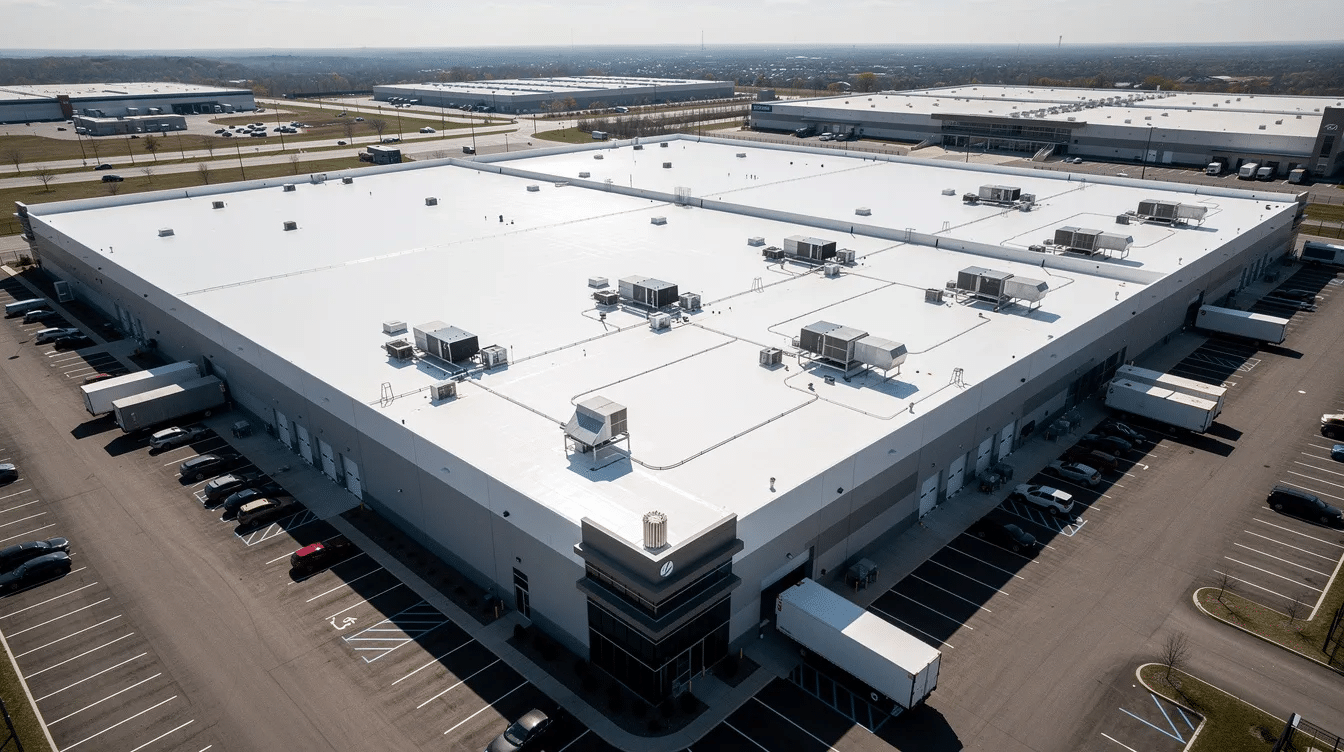
Flat roofs appear on commercial buildings, warehouses, schools, apartment blocks, and increasingly on modern residential structures. Many South Florida homes feature carports, Florida rooms, or rooftop decks supporting solar panels, all of which rely on low-slope construction. The low profile enables height-restricted builds, maximizes usable interior space, and supports sustainability features like rainwater harvesting or green roofs.
Water Management
Water management remains critical on any flat roof. Ponding water softens adhesives, erodes membranes, and in colder climates, freeze-thaw cycles cause cracking and leaks. The Florida Building Code (FBC 1507.10.1) mandates at least 1/4” per foot slope for commercial flat roofing, often supplemented by tapered insulation to achieve proper drainage when the existing deck lacks sufficient fall.
Asphalt shingles and most residential roofing materials rated for 2:12 pitch do not belong on true flat roofs. Installing them can void warranties and cause chronic leaks within the first year. Flat roofs require fully waterproof membrane systems designed specifically for low-slope conditions.
TPO Roofer specializes in low-slope and flat roof systems, including complex drainage design and tapered insulation installation for proper water management.
Most Common Flat Roof Material Types
The most common flat roof material types are:
- Built-up Roof (BUR): Built-up roofing, also known as BUR, consists of multiple layers of asphalt and felt or fiberglass mats.
- Modified Bitumen: Modified bitumen roofing is a type of asphalt roofing that has been modified with rubber or plastic additives to improve its flexibility and durability.
- Concrete
- TPO: TPO is a single-ply roofing membrane made from a blend of rubber and plastic materials, known for its durability and energy efficiency.
- EPDM: EPDM is a synthetic rubber roofing membrane that is durable, weather-resistant, and can withstand extreme temperatures.
- PVC: PVC roofing is a durable, single-ply roofing membrane known for its strong waterproofing, resistance to chemicals, fire, and UV rays.
- Metal
- Green roofing
Next, we’ll explore the main types of flat roofing systems available in 2026.
Main Flat Roofing Systems in 2026
Today’s flat roofing systems fall into several main families: single ply membranes, asphalt-based systems (built up roofing and modified bitumen), metal roofing, and specialty assemblies like ballasted or vegetative roofs. Each offers distinct material properties, installation dynamics, and performance characteristics tailored to specific climates, budgets, and building uses.
According to National Roofing Contractors Association survey trends from 2015-2016 through the mid-2020s, TPO now leads the U.S. low-slope commercial market, surpassing EPDM in market share. Modified bitumen roofing and built up roofing (BUR) remain viable for budget retrofits and buildings requiring multi-layer redundancy.
Comparison of Major Flat Roofing Materials (2026 U.S. Averages)
|
System |
Cost per Square Foot |
Lifespan |
Maintenance Level |
|---|---|---|---|
|
TPO (Thermoplastic Polyolefin) |
$5 – $14 |
20-30 years |
Low |
|
EPDM (Ethylene Propylene Diene Monomer) |
$4 – $13 |
25-40+ years |
Moderate |
|
PVC (Polyvinyl Chloride) |
$6 – $17 |
25-30 years |
Low |
|
Built-Up (BUR) |
$4 – $10 |
20-30 years |
High |
|
Modified Bitumen |
$4 – $8 |
15-25 years |
Moderate |
|
Standing Seam Metal |
$8 – $30+ |
40-60+ years |
Very Low |
|
The “best” system depends entirely on your climate, building use, foot traffic requirements, and budget. Hot climates favor reflective TPO or PVC for superior energy efficiency. Cold regions often suit flexible EPDM or SBS modified bitumen. Metal excels for property owners prioritizing longevity despite higher upfront costs. |
|
|
|
TPO Roofer can walk you through options for your specific property, considering local building codes, energy incentives, and long-term cost projections, especially when planning commercial TPO roofing systems in Houston.
Next, we’ll take a closer look at the most popular single-ply membrane options for flat roofs.
Single-Ply Membrane Options: TPO, EPDM, PVC
Single ply membranes have become the most common flat roof choice for both commercial flat roofing and many residential projects since gaining prominence in the roofing industry during the 1970s. These thermoplastic or thermoset sheets (typically 60-80 mils thick) are mechanically fastened, fully adhered, or ballasted over insulation, dramatically reducing labor compared to multi-ply asphalt systems.
TPO Roofer focuses heavily on TPO and other single-ply roofing membrane systems, from design through proper installation and ongoing maintenance. The following cost ranges and lifespan figures represent approximate 2024-2026 U.S. market averages, varying by project scale, insulation requirements, and attachment method.
TPO (Thermoplastic Polyolefin)
Definition: TPO is a single-ply roofing membrane made from a blend of rubber and plastic materials, known for its durability and energy efficiency.
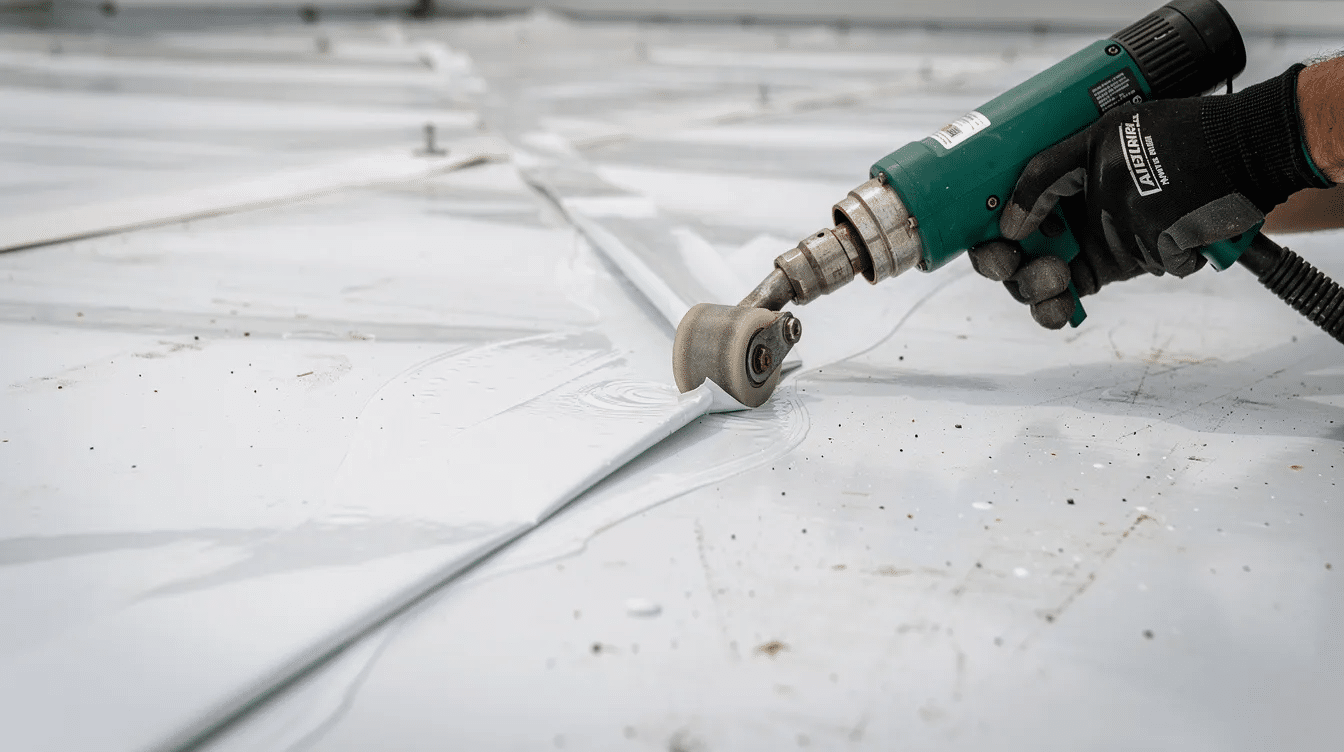
TPO is a white or light-colored single ply roofing membrane that creates heat welded seams at joints, forming connections often stronger than the sheet itself. Hot-air welding at 600-700°F bonds the material permanently, eliminating the adhesive-dependent seams found in some older systems.
Typical 2026 installation costs range from roughly $5 to $14 per square foot depending on roof size, insulation thickness, and attachment method. With proper maintenance, a TPO roof delivers 25-30 years of service life.
Key benefits of TPO:
- High reflectivity (65-80%) can reduce cooling costs by 10-30% in warm climates
- Compatible with solar panels and rooftop equipment mounting
- Good puncture and tear resistance (up to 300 lbs force)
- Qualifies for cool roof energy credits in many jurisdictions
Potential vulnerabilities:
- Punctures from dropped tools or heavy foot traffic without walkway pads
- Seam quality varies significantly with installer skill (certified crews reduce failure rates by 50%)
- Edge and penetration detailing requires careful flashing to prevent wind-driven leaks
Call TPO Roofer when considering TPO for new construction, re-roofing, or recovering an aging flat roof and learn more about what a TPO roof is and its advantages. Experienced roofing contractor installation makes the difference between a 15-year roof and a 30-year roof.
EPDM (Ethylene Propylene Diene Monomer)
Definition: EPDM is a synthetic rubber roofing membrane that is durable, weather-resistant, and can withstand extreme temperatures.
EPDM roofing is a synthetic rubber roofing membrane, usually black, that has protected flat roofs in North America since the 1960s. Large sheets (10-50 feet wide) reduce field seams on wide roofs, minimizing potential leak points.
Installation costs in 2026 typically range from $4 to $13 per square foot. When properly installed and maintained, EPDM delivers 25-40+ years of service, making it one of the longest-lasting membrane systems available.
Advantages of EPDM:
- Excellent flexibility in cold weather (functional to -40°F with elongation exceeding 500%)
- Strong UV resistance for exposed applications
- Large sheet sizes reduce seams on big commercial roofs
- Proven track record spanning six decades
Drawbacks to consider:
- Black EPDM absorbs heat, potentially increasing cooling costs 20-30% in sunny climates
- Vulnerable to punctures from foot traffic without protective pads
- Potential long-term shrinkage or “tenting” if not fully adhered and detailed correctly
EPDM often makes sense for simple roofs with limited foot traffic in moderate or cold climates. TPO Roofer can evaluate when EPDM versus TPO makes better sense for your specific building and energy bills situation, and their detailed TPO roofing FAQs for commercial flat roofs can help clarify which system fits your needs.
PVC (Polyvinyl Chloride)
Definition: PVC roofing is a durable, single-ply roofing membrane known for its strong waterproofing, resistance to chemicals, fire, and UV rays.
PVC roofs feature a white, heat welded membrane known for superior chemical resistance, grease resistance, and fire resistance. This makes PVC the go-to choice for restaurants, factories, labs, and industrial facilities with rooftop exhaust systems.
Installed costs in 2026 range from roughly $6 to $17 per square foot. Typical service life spans 25-30 years, with documented cases of longer performance on well-maintained roofs.
PVC advantages:
- Strong seams comparable to TPO through heat welding
- Excellent performance where oils, fats, and chemicals are present
- Very good reflectivity for energy savings (over 90% in white formulations)
- Lab-documented durability exceeding 25 years
Potential downsides:
- Higher initial cost than EPDM in many markets (10-20% premium)
- Requires experienced installers familiar with PVC-specific techniques
- Historical environmental concerns around manufacturing and disposal, though recycling programs have improved significantly by 2026
PVC shines on buildings with frequent rooftop grease exposure or chemical exhausts. TPO Roofer can install PVC membrane systems where they provide the best long-term value for your commercial or industrial buildings.
Next, we’ll examine asphalt-based flat roofing systems, including BUR and Modified Bitumen.
Asphalt-Based Flat Roofing: BUR and Modified Bitumen
Asphalt systems dominated flat roofing for most of the 20th century and remain widely used, especially on older buildings and budget-sensitive projects. Built up roofing and modified bitumen offer multi-layer redundancy and proven puncture resistance that single-ply systems achieve through different means.
These systems are heavier and more labor-intensive than single-ply alternatives, but they provide excellent impact resistance and a track record spanning over a century. The multiple layers create redundancy, with hot asphalt or cold-applied adhesives bonding reinforcing fabrics into a monolithic waterproof assembly.
However, asphalt installations involve considerations that single-ply systems avoid: odors during hot-mopped application, fire risks with torch-down methods, and potential code restrictions in urban areas. Structural evaluation is often necessary due to the added weight (4-15 psf dead load for BUR systems).
Property owners with older BUR or modified bitumen roofing should schedule inspections with TPO Roofer to determine whether coating, recovering, or full replacement offers the best path forward, supported by their specialized TPO roof inspection services in Texas.
Built-Up Roofing (BUR)
Definition: Built-up roofing, also known as BUR, consists of multiple layers of asphalt and felt or fiberglass mats.
Built up roofing BUR consists of alternating layers of bitumen and reinforcing fabrics, topped with gravel or reflective coating, forming a multi-ply membrane. Traditional BUR systems build 3-5 plies using hot-mopped asphalt at 400-500°F.
Ballpark installed costs range from $4 to $10 per square foot, with service life around 20-30 years when properly designed and maintained.
BUR strengths:
- High puncture and impact resistance (withstands 2-inch hail equivalents)
- Proven track record spanning 100+ years on commercial buildings
- Excellent fire resistance with gravel surfacing (Class A rated)
- Multi-layer redundancy provides backup if one ply is damaged
BUR limitations:
- Heavy weight (4-15 psf) may require structural evaluation before installation
- Hot asphalt fumes during installation create odor complaints
- Slower, more labor-intensive application (2-3x longer than single-ply)
- Complex geometries significantly increase labor costs
BUR remains practical for large commercial roofs that can support the weight and where building owners value redundancy. TPO Roofer can restore aging BUR systems with coatings or recommend full replacement when the existing materials have reached end of life.
Modified Bitumen
Definition: Modified bitumen roofing is a type of asphalt roofing that has been modified with rubber or plastic additives to improve its flexibility and durability.
Modified bitumen roofing is asphalt enhanced with polymers: SBS (styrene-butadiene-styrene) for cold flexibility and APP (atactic polypropylene) for UV resistance. These modifiers dramatically improve performance over traditional BUR, with SBS formulations offering elongation exceeding 600%.
Typical installed costs run $4 to $8 per square foot, with service life around 15-25 years depending on the number of plies and exposure conditions.
Installation methods include:
- Torch-applied (450°F flame melts underside for adhesion)
- Hot-mopped (traditional asphalt application)
- Cold-applied adhesives (eliminates open flame)
- Self-adhered “peel-and-stick” sheets for flame-sensitive areas
Advantages:
- More flexible than traditional BUR, especially in cold weather
- Easier detail work around penetrations and flashings
- Options for fully torched, cold-applied, or hybrid systems
- Mineral granules surfacing provides UV protection and aesthetics
Concerns:
- Fire risk with torch-applied systems (NFPA statistics show flash fire incidents)
- Seam quality depends heavily on installer skill
- Potentially shorter lifespan compared to top-tier single-ply systems
- Some insurance policies void coverage for torch-down applications
Modified bitumen can be a practical choice for small commercial roofs, step-ups, and curb details. TPO Roofer can integrate modified bitumen details with larger TPO or PVC fields when hybrid systems make sense for complex roof structures, particularly on industrial TPO roofing systems for demanding facilities.
Next, we’ll look at metal and specialty flat roofing options.
Metal and Specialty Flat Roofing Options
Standing seam metal roofs, green roofs, and ballasted systems represent niche but important options for flat roof applications. These solutions are typically chosen for aesthetics, extreme durability, or sustainability goals rather than lowest first cost.
Metal provides premium longevity with virtually no maintenance requirements. Green roofs deliver environmental benefits including improved insulation and stormwater management. Ballasted systems offer UV protection without penetrating the membrane.
Property owners considering green roofs or ballasted systems should involve an experienced contractor like TPO Roofer early in the design process to address structural loads, waterproofing, and local code requirements.
Standing Seam and Flat-Seam Metal
Standing seam metal roofs feature long, interlocking metal panels with raised seams, suitable for low slope roofs when engineered correctly to manage thermal expansion and building movement. Common metals include galvanized steel, aluminum, zinc, and copper, with reflective Kynar coatings (70% reflectivity) available for cool roof performance.
Typical installed costs range from $8 to $30+ per square foot. Expected service life spans 40-60+ years per roofing industry studies, with some metal roofs lasting 75+ years in favorable conditions.
Metal roof advantages:
- Exceptional longevity outlasting most membrane systems by 20+ years
- Virtually no maintenance required beyond periodic inspections
- Excellent fire resistance
- Easy integration with solar panel mounting systems
- Concealed clips allow 2-3 inches of thermal movement without stress
Challenges to consider:
- Higher upfront cost (2-3x single-ply per square foot)
- Thermal expansion requires slip details and careful engineering for low-slope applications
- Requires installers trained in low-slope metal detailing to prevent oil-canning
TPO Roofer coordinates metal edge conditions when combining standing seam with membrane systems for the best performance on complex roof designs.
Green Roofs and Ballasted Systems
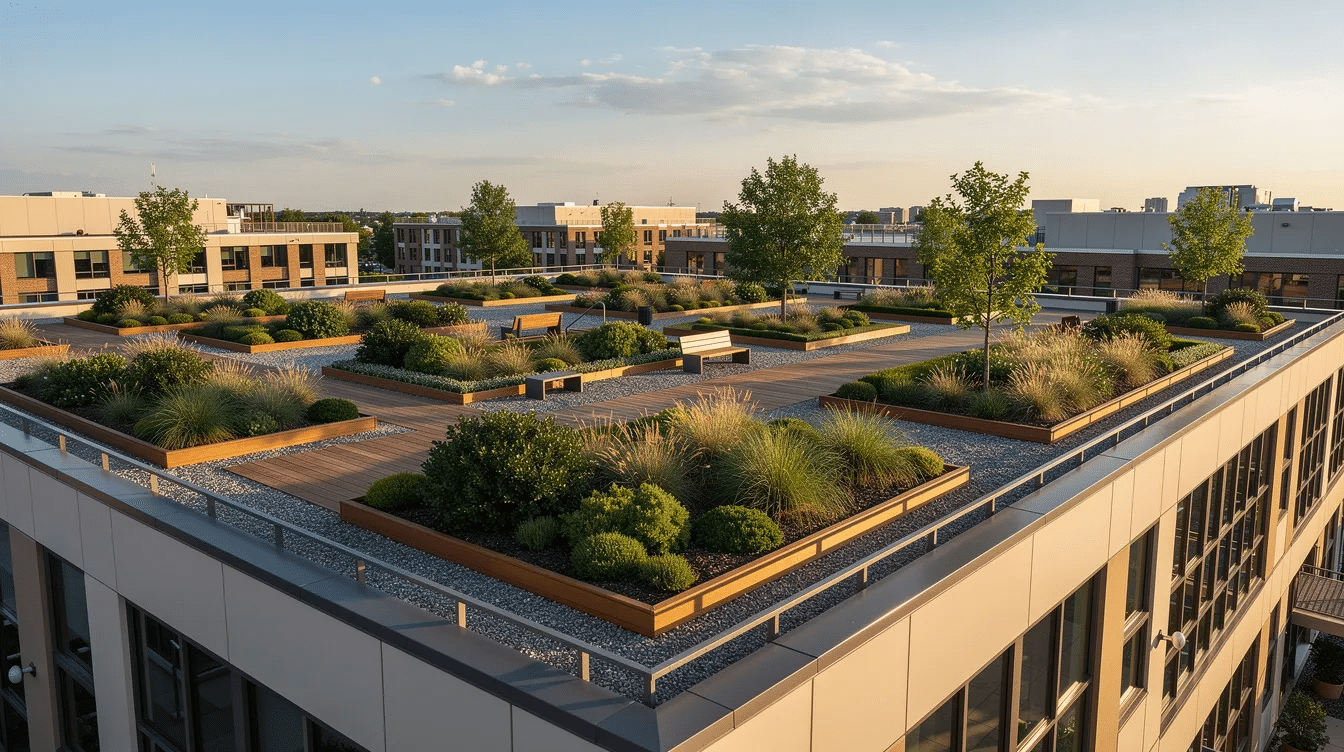
Green roofs add soil and plants over a waterproof membrane, boosting insulation R-values by 5-10 points and detaining 50-70% of stormwater per studies. These systems improve urban biodiversity and reduce heat island effects.
Green roof design elements:
- Root-resistant membranes (often PVC or TPO)
- Drainage mats and filter fabrics
- Growing media (4-24 inches depth)
- Plant selection appropriate to climate and maintenance level
Saturated green roof loads reach 15-50+ psf, requiring structural engineering verification before installation. This adds significant cost beyond the roofing materials themselves.
Ballasted systems use river rock or pavers (10-20 psf) to hold loose-laid membranes in place without adhesives or mechanical fasteners. This provides UV and fire protection while eliminating deck penetrations.
Important warning: Ballasted roofs are generally not recommended in hurricane or tornado-prone regions. High winds can displace ballast, turning stones into dangerous wind-borne debris. Florida building codes restrict ballasted assemblies in High-Velocity Hurricane Zones.
Consult TPO Roofer when considering green or ballasted roofs so membrane selection, load calculations, and local code requirements are addressed from day one of your new flat roof project, especially if you’re planning commercial flat roof installation and repair in Houston.
Next, we’ll discuss installation methods and why they matter for flat roofs.
Installation Methods and Why They Matter
How a flat roof is attached affects wind performance, condensation control, and warranty coverage. Professional installation by a specialist like TPO Roofer proves crucial because attachment errors often show up only years later as leaks or blow-offs. Industry data suggests that 70% of roof failures trace back to attachment and detail flaws rather than material defects.
Local building codes dictate acceptable assemblies based on wind-uplift requirements and fire ratings. Florida’s High-Velocity Hurricane Zones demand enhanced anchoring systems compared to lower-risk areas. The installation method must match your specific exposure category.
Energy-efficient “warm roof” assemblies place continuous insulation (typically 4-6 inches of polyisocyanurate, achieving R-25+) above the deck. This prevents interstitial condensation and thermal bridging that can cause moisture problems and increased energy bills in mixed climates.
Fully Adhered, Mechanically Attached, and Ballasted
Fully adhered systems glue membranes continuously to the substrate or insulation using urethane or polyurethane adhesives. This creates a smooth appearance and excellent wind performance (up to 150 psf FM-rated uplift resistance). However, fully adhered installations require vapor barriers in humid climates to prevent condensation issues.
Mechanically attached systems fasten membranes in rows through insulation to the deck using screws and plates spaced every 12-24 inches. Seams are then heat welded or sealed. This approach is common on large commercial roofs (100,000+ sq ft) because crews can install up to 10,000 square feet per day. The tradeoff is potential flutter-induced fatigue in high-wind areas if fastener patterns don’t match wind-zone requirements.
Ballasted systems use loose-laid membranes held by stone or pavers. While this eliminates deck penetrations (beneficial for retrofits over existing materials), the added structural load and wind concerns limit applications. Most 2026 projects avoid ballasted assemblies except on protected rooftop areas, where a carefully designed TPO retrofit roofing solution in Texas can often provide better long-term performance.
|
Method |
Wind Resistance |
Install Speed |
Best Applications |
|---|---|---|---|
|
Fully Adhered |
Excellent |
Moderate |
High-wind zones, complex roofs |
|
Mechanically Attached |
Good to Excellent |
Fast |
Large warehouses, industrial buildings |
|
Ballasted |
Moderate |
Fast |
Retrofits in low-wind areas |
|
TPO Roofer evaluates roof deck type (steel, concrete, wood), building height, and wind exposure to choose the right attachment method for each project. Poor installation of any method leads to the same result: premature failure and costly repairs. |
|
|
|
Next, we’ll cover flat roof maintenance, common problems, and prevention strategies.
Flat Roof Maintenance, Problems, and Prevention
Even the best flat roofing materials will fail early without regular proper maintenance and timely repairs. Neglect can cut lifespan in half regardless of initial quality variations in material grade.
Maintenance Best Practices
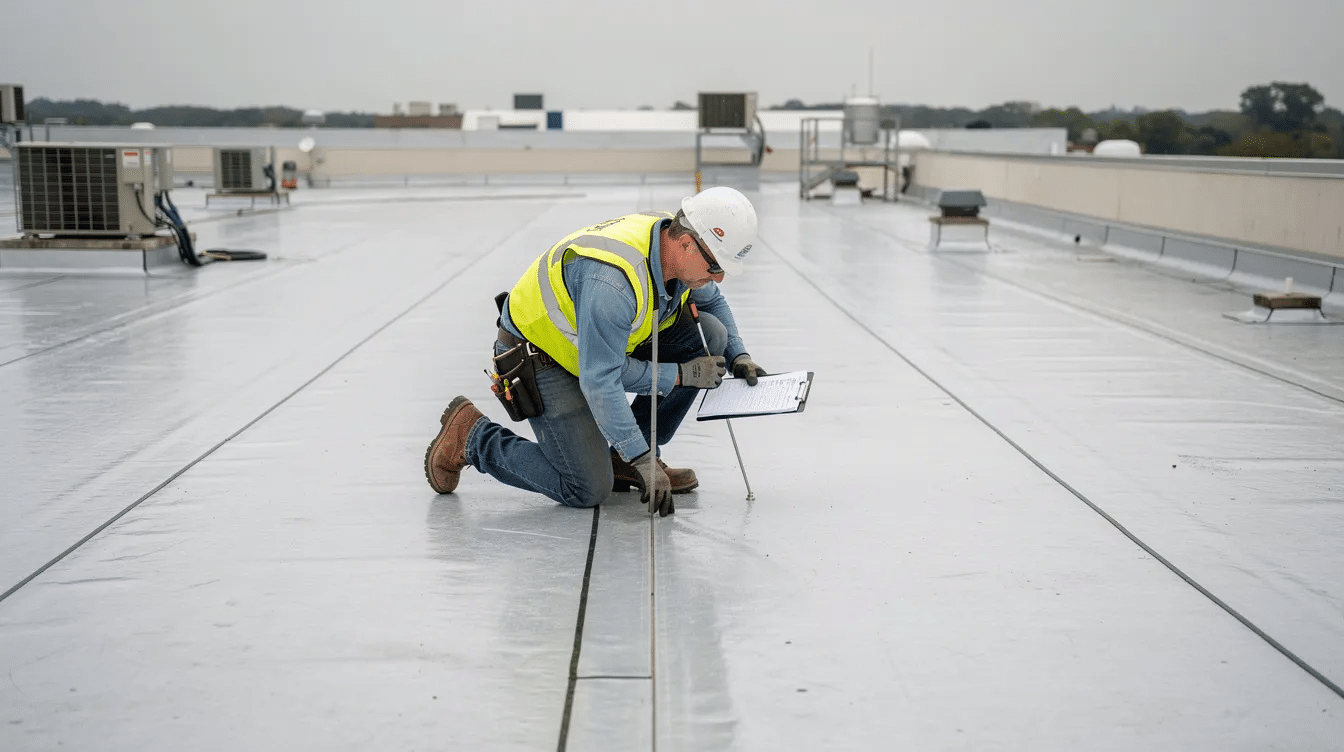
Building owners should plan for at least two professional roofing professional inspections per year, typically in spring and fall, plus additional checks after major storms. These inspections catch problems when repairs cost hundreds rather than thousands of dollars.
Essential prevention practices:
- Keep drains clear, especially after storms
- Install walkway pads in high-traffic areas (reduces tears by 80%)
- Renew sealants every 5 years
- Control roof access to authorized personnel only
- Address minor defects within 30 days of discovery
TPO Roofer offers TPO roof maintenance programs in Texas, 24/7 emergency roof repair services, and long-term condition reports to help property owners budget for future replacements before urgent failures force expensive decisions.
Typical Issues on Flat Roofs
- Ponding water (standing for more than 48 hours) accelerates membrane aging, promotes algae growth, adds structural load, and can damage the underlying roof deck. Clogged drains or insufficient tapered insulation typically cause ponding, and Florida storms can quickly overwhelm undersized drainage systems.
- Seam and flashing failures cause the majority of leaks on flat roofs—roughly 60% by some industry estimates. Poor initial workmanship and movement of rooftop HVAC equipment over time stress these connections until they fail.
- Punctures and tears result from HVAC service crews, dropped tools, or unauthorized roof access. Industrial facilities with frequent rooftop maintenance are particularly vulnerable. Walkway pads and controlled access procedures dramatically reduce this risk.
- Blistering and ridging on asphalt systems indicate trapped moisture or poor adhesion between plies. These defects allow water intrusion and accelerate deterioration of the entire roof structure.
Contact TPO Roofer at the first sign of staining on ceilings, bubbling paint, or visible membrane damage. Early intervention prevents minor issues from becoming major structural problems threatening your roof’s integrity.
Next, we’ll discuss how to choose the right flat roof for your building.
How to Choose the Right Flat Roof for Your Building
Selecting the right flat roof comes down to answering a few key questions about your building, climate, and ownership timeline.
- How important are energy savings? In hot, sunny climates, white TPO or PVC membranes can reduce cooling costs 10-30% through superior energy efficiency and cool roof reflectivity. EPDM’s black surface absorbs heat, making it better suited to cold regions where passive solar heating helps reduce winter energy bills.
- Is there rooftop grease or chemicals? Restaurants, food processing plants, and laboratories with chemical exhausts need PVC’s chemical resistance. TPO and EPDM can degrade when exposed to cooking oils and industrial chemicals.
- Will people walk on this roof regularly? Heavy foot traffic areas need walkway pads regardless of membrane type. If roof access is frequent (HVAC maintenance, window washing staging), factor the cost of protective systems into your budget.
- How long do you plan to own the building? Calculate “cost per year of service” rather than focusing on lowest bid. A $5 per square foot modified bitumen roof lasting 18 years costs $0.28/year. A $7 per square foot TPO lasting 28 years costs $0.25/year—lower total cost despite higher upfront investment.
- What do local codes require? Florida’s High-Velocity Hurricane Zones demand specific wind-uplift ratings and fire classifications. Your roofing professional must understand local requirements to specify compliant assemblies.
For any new roof or replacement project, schedule a professional roof evaluation with TPO Roofer to receive a written proposal tailored to your building’s exact conditions and local codes.
Next, we’ll explain why working with a flat roof specialist is essential for your project’s success.
Why Work with a Flat Roof Specialist Like TPO Roofer
Flat roofs demand different skills, tools, and design knowledge than steep-slope shingle roofs. The membrane systems, attachment methods, and drainage engineering involved require specialists, not generalists who occasionally work on low-slope projects.
Advantages of hiring TPO Roofer:
- Deep expertise with TPO, PVC, EPDM, and modified bitumen systems
- Knowledge of manufacturer warranty requirements and proper installation techniques
- Experience coordinating with HVAC contractors, solar installers, and structural engineers
- Understanding of local building codes including Florida’s HVHZ requirements
- Proper equipment for heat welding, liquid applied systems, and spray polyurethane foam applications
TPO Roofer handles projects ranging from small retail units and restaurants to large distribution centers and multi-story residential buildings. Services include inspections, leak detection, repairs, recover systems over existing materials, complete tear-offs, and long-term maintenance plans for extended service life.
Whether you need minimal maintenance monitoring, emergency repair response, or a complete new flat roof with spray foam insulation and liquid applied coatings, TPO Roofer provides the specialized expertise flat roofs require.
Call TPO Roofer today or request an inspection for any flat or low-slope roof project you’re planning in 2026 or beyond. A specialist evaluation costs far less than repairing damage from poor installation by inexperienced contractors.
Next, we’ll answer some of the most frequently asked questions about roofing for a flat roof.
FAQ: Roofing for a Flat Roof
These frequently asked questions address common concerns not fully covered in the main sections. For site-specific answers, contact TPO Roofer through their Houston flat roof installer page for a detailed evaluation.
How much does it cost to reroof a flat roof in 2026?
Costs vary widely by material, insulation thickness, existing conditions, and project size. Many flat roof replacements fall roughly between $5 and $18 per square foot in 2026, with installation costs higher on small, complex roofs with many penetrations compared to large, open surfaces. Only an on-site inspection can provide an accurate number. Schedule a visit from TPO Roofer for a detailed written estimate that accounts for your specific conditions.
Can I install a new flat roof over the old one?
“Recover” installations are sometimes allowed by building codes when the existing roof is dry, firmly attached, and only one existing layer is present. Wet insulation, multiple layers, or structural concerns typically require a full tear-off for a safe, durable system. TPO Roofer performs moisture scans or core cuts to determine whether your current roof qualifies for recovering, potentially saving significant labor costs.
How long does a flat roof replacement usually take?
Small commercial roofs under 5,000 square feet can often be completed in a few days. Large projects may take several weeks depending on weather, complexity, and coordination with rooftop equipment installers. Work is typically staged so the building remains watertight every night, minimizing disruption to occupants or business operations. TPO Roofer provides project schedules in advance so you can plan around noisy or access-restricted periods.
Do I have to shut down my business during flat roof work?
Most flat roof projects allow businesses to stay open, though temporary closures of specific entrances, parking areas, or interior zones directly under active work may be necessary. Odor and noise are typically higher with asphalt systems than with single-ply membranes like TPO, EPDM, or PVC. Coordinate with TPO Roofer to schedule the noisiest or most disruptive tasks during off-hours or slower business periods for minimal environmental concerns impact on operations.
What kind of warranty can I expect on a new flat roof?
Manufacturer warranties on TPO, EPDM, and PVC commonly range from 10 to 30 years depending on system type, membrane thickness, and installation details. Contractor workmanship warranties typically span 1-5 years and require proper maintenance plus prompt repairs of incidental damage. Review warranty documents carefully with TPO Roofer to understand the inspections, maintenance, and repair conditions needed to keep coverage in force throughout the warranty period.